1.WPSA Indonesia Strengthens International Collaboration with Dr. Eckel Animal Nutrition
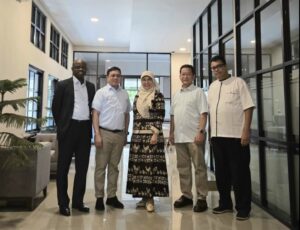
Bogor, Indonesia – 20 November 2025 — The World’s Poultry Science Association (WPSA), Indonesia, successfully hosted a visit from the team of Dr. Eckel Animal Nutrition, a Germany-based global company specializing in animal nutrition and feed additives. This visit marked an important step in strengthening international collaboration in the fields of poultry nutrition and sustainable livestock production.
The meeting took place in Bogor, Indonesia, from 10:00 to 12:00 AM, where representatives from the WPSA Indonesia and Dr. Eckel Animal Nutrition engaged in in-depth discussions on potential collaborative initiatives. Key topics included innovative nutritional strategies, feed efficiency, gut health solutions, and sustainability practices aimed at supporting the future of the poultry industry in Indonesia and beyond.
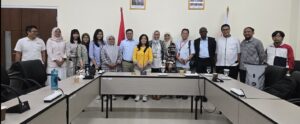
Following the initial meeting, discussions continued at the Research Center for Animal Husbandry, National Research and Innovation Agency (BRIN), from 01:00 to 04:00 PM. This session focused on exploring opportunities for joint research programs, knowledge exchange, and the development of strategic initiatives that could be implemented through collaboration between academia, industry, and research institutions.
Both parties expressed strong interest in fostering long-term cooperation, particularly in research-driven solutions that address current challenges in poultry production, such as productivity, environmental impact, and sustainable feed resources. This collaboration is expected to contribute to scientific advancement, capacity building, and the dissemination of best practices within the poultry sector.
This visit reflects the WPSA’s ongoing commitment to building global partnerships and promoting science-based innovation to support the sustainable development of the poultry industry at the national and international levels.
2. WPSA Indonesia Supports the Serama Cup 2025 to Strengthen Community-Based Poultry Development
Bogor, Indonesia. WPSA Indonesia, in collaboration with JST Reborn and IPB University, proudly supported the successful organization of the Serama Cup 2025, an event that not only highlighted the art and beauty of Serama chickens but also strengthened collaboration, fraternity, and community empowerment within Indonesia’s poultry sector.
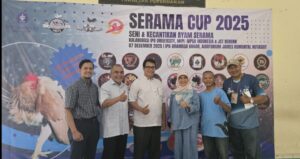
Held on 7 December 2025 at the James Humuntal Hutasoit Auditorium, IPB Dramaga Campus, Bogor, the event was jointly organized with IPB University and various Serama enthusiast communities. The Serama Cup served as a vibrant meeting point for hobbyists, breeders, small and medium enterprise (SME) actors, and young people eagerly learn more about poultry science and the artistry of Serama competitions.
Notably, the Serama Cup 2025 marked a historic milestone as the first Serama chicken contest in Indonesia to involve judges from academic and scientific backgrounds. The inclusion of academics and researchers as official judges introduced a science-based evaluation approach, strengthening objectivity and reinforcing the integration of scientific knowledge with traditional poultry hobby practices.
The competition attracted participants from multiple cities across Indonesia, including Jakarta, Bogor, Depok, Tangerang, Bekasi, Cirebon, Bandung, Surabaya, Madura, Bangil, Lampung, Jambi, and Yogyakarta. In total, 110 Serama chickens were registered and competed in the contest, reflecting strong national interest and the growing popularity of this ornamental poultry breed.
Through this initiative, the WPSA in Indonesia actively promoted the development of a healthy, competitive, and inclusive poultry ecosystem. The key focuses included improving breeding quality, strengthening networks among poultry enthusiasts, and creating business opportunities that support the sustainable growth and independence of poultry-related SMEs.
Serama keeping is more than a hobby; it represents a platform for creativity, friendship, and grassroots economic empowerment. Events such as the Serama Cup 2025 demonstrate how ornamental poultry can contribute meaningfully to community development while preserving valuable local genetic resources.
This activity reflects the WPSA Indonesia’s ongoing commitment to advancing poultry development in Indonesia by integrating science, culture, and community engagement. Through collaboration and shared passion, the Serama Cup 2025 highlighted the potential of local poultry to support both social cohesion and economic resilience.
3. WPSA Indonesia Contributes to the Development of Standards for Indonesian Dwarf-Type Chickens
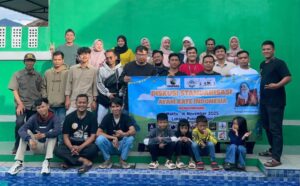
Bogor, Indonesia — On 16 November 2025, several bantam (dwarf) chicken associations in West Java, particularly those dedicated to kate chickens, jointly organized a focus group discussion (FGD) with the Indonesian Ornamental Poultry Breeders Association (HIMPARA), WPSA Indonesia, and academics from the Department of Animal Production and Technology, Faculty of Animal Science, IPB University. The discussion focused on establishing an appropriate and unified standard for Indonesian kate chickens.
For many years, the evaluation of ornamental chickens in Indonesia has largely relied on characteristics passed down through generations within hobbyist communities and associations. While this traditional knowledge represents valuable heritage, it has often led to differing interpretations. The absence of clear and measurable criteria has resulted in inconsistent judging outcomes across competitions, prompting growing concern among associations.
In response, several Indonesian Kate chicken associations initiated a collaborative effort with the WPSA Indonesia and the IPB University as scientific partners. This collaboration marked a significant milestone, as it was the first time that the formulation of a national ornamental chicken standard was openly discussed in a single forum involving both community representatives and scientists.
During the FGD, practical field experience from breeders and judges was integrated with scientific approaches to animal production and morphology. This synergy aims to produce standards that are not only visually appealing but also objective, measurable, consistent, and scientifically sound.
The FGD represents an important initial step toward developing an official guideline for the characteristics of Indonesian Kate chickens, a reference that has long been absent. Once established, this guideline is expected to serve as a common benchmark for judges, breeders, and hobbists nationwide.
In addition to national alignment, the adoption of science-based standards is expected to strengthen the identity of Kate chickens as part of Indonesia’s ornamental poultry genetic resources, increasing their recognition and value at the international level.